
Voice AI Follow-up Agent for a Real Estate Brokerage
A real estate brokerage generating 60–80 inbound leads per day could not respond fast enough. Their average response time was four hours. By then, the lead had already spoken to two competitors.
The problem
A construction company with an active lead generation operation generating 60-80 inbound enquiries per month could not respond fast enough. Research shows that response speed within the first five minutes is a primary driver of conversion in construction and trade services. Their average response time was four hours. The sales team was small - three people, all focused on project delivery - and leads were going cold before anyone could call them back.
"We were spending money on lead generation and then letting those leads sit. By the time an agent called, the person had already spoken to two competitors. The leads were not bad. Our process was."
Context
Construction and trade services companies occupy an unusual position in lead management: the people best placed to close a job are also the people delivering the work. A three-person sales team that is simultaneously managing live projects cannot be expected to respond to enquiries within minutes. Leads come in through multiple channels - web forms, referral calls, trade show contacts, and repeat clients - and they arrive unpredictably. A quiet morning can be followed by five enquiries in an hour.
This company had tried to solve the response problem with an automated email sequence. It did not work. The emails were generic, generated spam complaints from residential contacts, and achieved poor open rates. More fundamentally, construction clients want to speak to someone. A written sequence cannot answer a question about project timelines, rough budget ranges, or whether the company has experience with a specific type of work. The response speed problem required a voice solution, not a text solution. The prior email automation had also damaged their domain reputation slightly, which was an additional problem to manage during the new implementation.
What we built
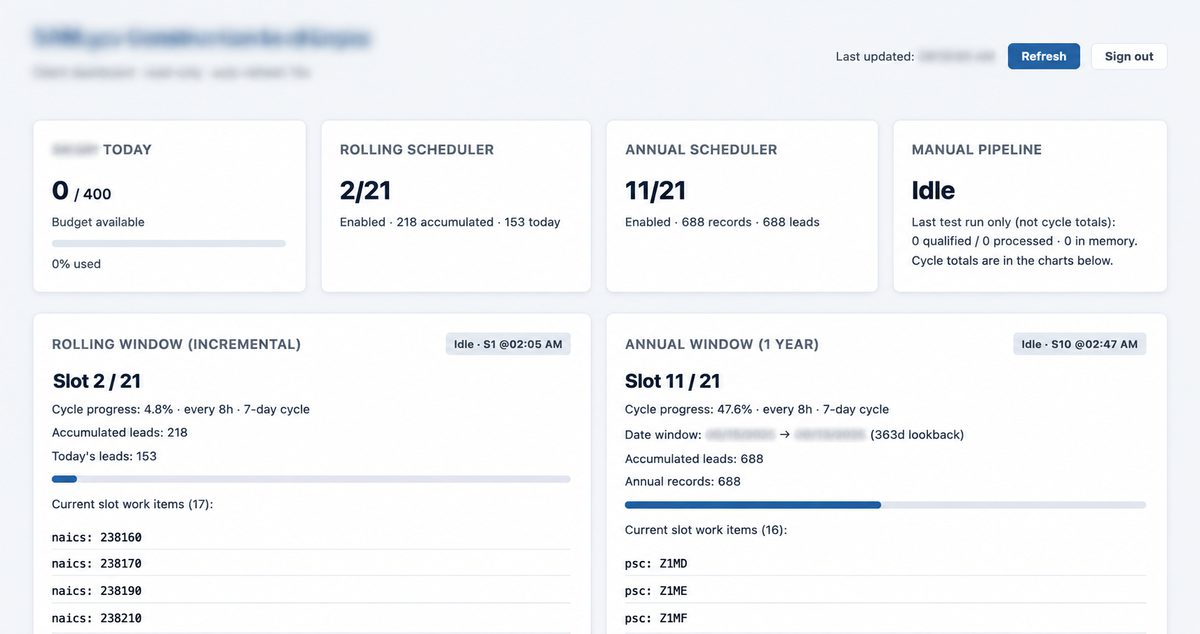
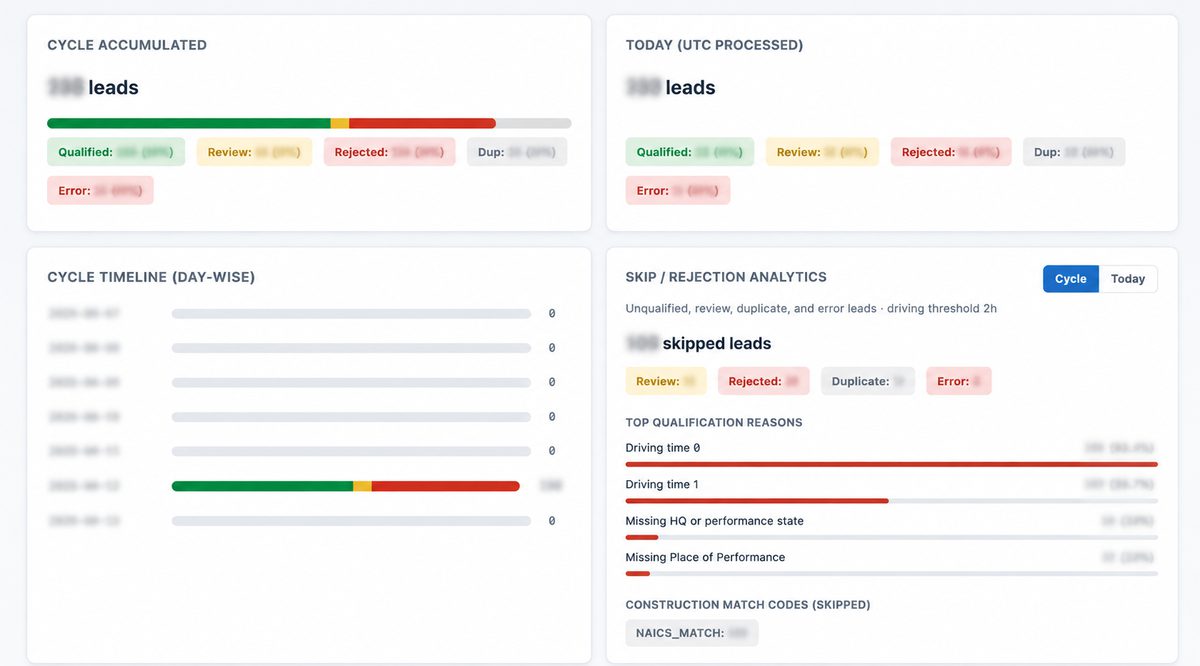
We deployed a Vapi voice AI agent integrated with their CRM (GoHighLevel). When a lead submits an enquiry, the agent calls them within 60 seconds, introduces itself naturally, works through a structured qualification script covering project type, timeline, budget range, and location, then routes the outcome to the correct pipeline stage and logs the full call transcript automatically.
Technical approach
The agent is built on Vapi and integrated with GoHighLevel via webhook and API. The trigger is any new lead record creation in GoHighLevel - whether from a web form submission, a manual entry by the sales team after a referral call, or a trade show import. The agent calls within 60 seconds of record creation and works through a qualification script that covers the four key dimensions the sales team needs to assess a construction enquiry: project type and scope, desired timeline, indicative budget, and location relative to their service area.
Outcomes from each call are automatically classified into pipeline stages: qualified and ready for site visit, interested but too early (enters a nurture sequence with a scheduled follow-up call), out of service area (routed to a referral partner if applicable), or unqualified based on budget or scope mismatch. The full call transcript is logged to the CRM record so that when the sales team picks up a qualified lead, they already have the context they need. We built a deduplication layer that checks for matching name, email, and phone number across all channels before triggering the agent - construction leads frequently submit multiple forms or call in addition to submitting online, and triggering multiple calls to the same person would be harmful to the brand experience.
The automation timeline
Challenges and how we solved them
The deduplication requirement turned out to be more complex than initially scoped. Construction leads frequently arrive through multiple channels in a short window - a person might submit a web form on Monday morning and then call the office on Monday afternoon when they have not heard back. Without deduplication, both contacts would trigger an agent call. We matched on three fields - name, email, and primary phone number - with fuzzy matching on the name field to handle minor variations. Any potential duplicate is flagged for human review rather than suppressed automatically, because some cases where name and phone number match are genuinely different people in the same household enquiring about different jobs.
The other significant challenge was call timing. The first version of the system called leads at the moment of form submission, which occasionally meant calling someone who had submitted a form at 10pm on a Sunday. We added business hours logic with a queue that holds calls outside of defined hours and dispatches them at the next available window. For after-hours submissions, the agent also sends an immediate SMS acknowledging the enquiry and setting the expectation for a call the following morning, which improved answer rates significantly.
Results
Response rate lifted 3.4x in the first month. The team now handles over 200 leads per day with zero manual CRM input.
The downstream effect on the sales team's time was significant. The three salespeople who had previously been the bottleneck in the lead response process now receive a CRM notification only when a lead has been qualified by the agent - with the qualification summary already populated. They spend their time on site visits and proposals rather than initial screening calls. The qualification data logged from every call has also given the company its first systematic view of where enquiries are coming from and what types of projects are most commonly requested - information that is now informing their marketing channel allocation decisions.
Key learning
In construction and trade services, the first five minutes after a lead submits determines whether you win the quote. Most companies optimize their proposal quality, their pricing, or their portfolio - not their response speed. The qualification agent does not win deals on its own. What it does is get you into the conversation before a competitor does, which is the prerequisite for everything else. If you are generating leads and your response time is measured in hours rather than minutes, that is the highest-leverage problem to solve before any other sales optimization.