
Voice AI Patient Scheduling for a Multi-Specialty Clinic
A multi-specialty clinic with eight practitioners was receiving 80–120 scheduling calls per day. After-hours calls went to voicemail and were never returned. New patient acquisition was suffering from a process problem, not a demand problem.
The problem
A multi-specialty clinic with eight practitioners was receiving 80–120 scheduling calls per day. Front desk staff spent four to five hours on scheduling calls alone, with a meaningful share going to voicemail after 5pm and never being returned. New patient acquisition was suffering.
"We calculated we were missing roughly 25 to 30 calls every day because they came in after hours or while the phones were busy. These were not cold leads - these were people actively trying to book. We were turning away revenue without realising it."
Context
Multi-specialty clinics are a particularly challenging environment for front desk operations. Unlike a single-discipline practice with a straightforward booking flow, a clinic with family medicine, physiotherapy, and psychology under one roof has meaningfully different scheduling requirements for each service type. Appointment durations vary. Some practitioners require intake forms before a first booking. Some have protected research or admin time that front desk staff need to know about but is not always clearly blocked in the scheduling system. Cancellation policies differ between disciplines. A front desk team handling 80-120 calls per day across these services is managing a significant amount of complexity under time pressure.
The clinic was staffed 9am to 5pm, which is the same window during which many of their patients are working. After-hours calls went to a voicemail system with a callback the next morning - typically a 12-18 hour lag. For prospective new patients, this was often fatal to the booking. Research consistently shows that healthcare consumers book with the first provider who responds. A prospective psychology patient who calls at 6pm on a Tuesday and does not hear back until Wednesday morning has typically explored two or three alternatives in the interim. The clinic had a demand problem that looked like a capacity problem: they were not understaffed, they were unavailable at the times patients wanted to book.
What we built
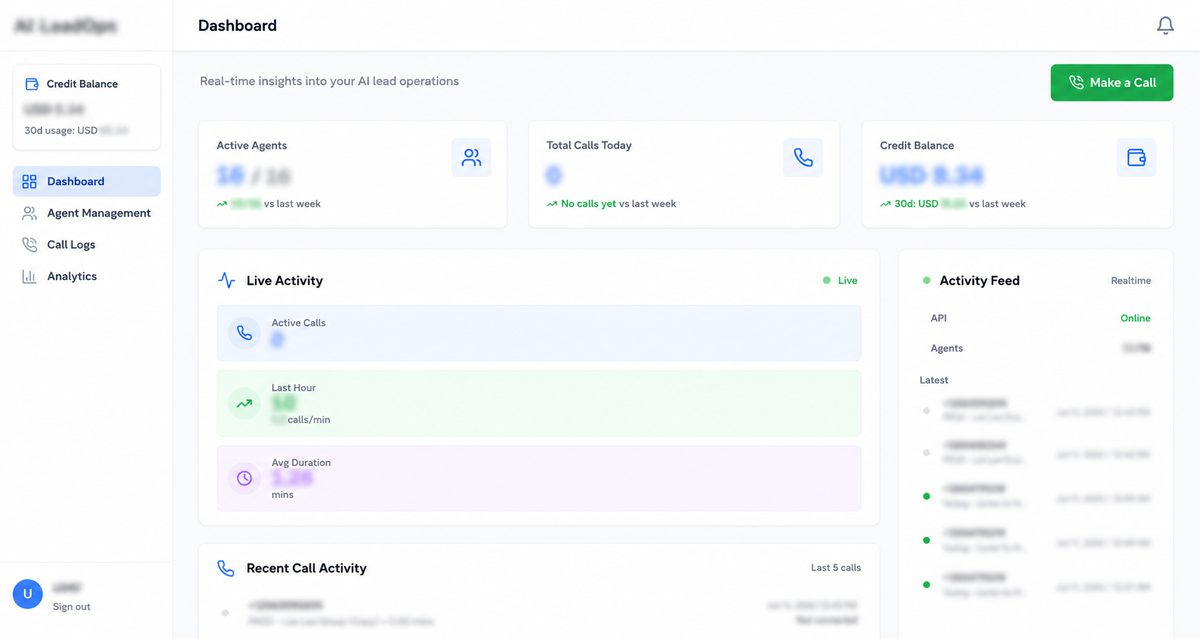
We deployed a Vapi voice AI agent integrated with the clinic's scheduling platform (Jane App). The agent answers every call within two rings, confirms real-time availability, books appointments, handles rescheduling, and sends automated confirmations and reminders - including after hours and weekends.
Technical approach
The agent is built on Vapi and integrated with Jane App via their scheduling API. Real-time availability checking runs against the live Jane App calendar, which means the agent can offer specific appointment slots and confirm bookings immediately rather than taking a message for a callback. The scheduling logic handles all eight practitioners, each with their own availability rules, appointment types, and duration configurations.
For new patient calls, the agent captures the information required for intake: name, contact details, appointment type, whether they have been seen at the clinic before, and insurance information where applicable. New patients who require intake forms receive an automated SMS with a link to complete the form before their appointment. The escalation logic was one of the more carefully designed parts of the system: the agent is explicitly scripted to transfer to a human or leave a flagged message for the clinic manager in four specific situations - any clinical question, any caller who appears distressed, any scheduling request that the agent cannot confidently fulfill, and any caller who specifically requests to speak to a person. This was not a fallback for system failures. It was a deliberate design decision that the agent should be transparent about what it handles and what it does not.
The automation timeline
Challenges and how we solved them
The most complex part of the build was modeling per-practitioner scheduling rules. Each of the eight practitioners had different configurations: some required intake forms before a first appointment, some had recurring blocked time for administrative work or supervision that needed to be protected from booking, and the psychology practitioners had a different cancellation policy to the physiotherapy team. Initially we attempted to manage this through the Jane App settings, but the platform did not support all the rule types we needed. We moved the per-practitioner configuration into a structured JSON config file that the agent reads at runtime. This also made future changes easier: the clinic manager can update practitioner rules in the config without requiring a code change.
Patient trust was the other significant challenge. Healthcare callers are sometimes anxious about who or what they are speaking to. In early testing, a small number of callers became confused or frustrated when they suspected they were talking to an automated system but were not certain. We revised the agent's opening script to introduce itself clearly as an automated scheduling assistant, not a person. Counter-intuitively, this increased both completion rates and patient satisfaction ratings. Patients who knew they were using a self-service tool and found it worked well responded positively. Patients who suspected deception and felt confused responded poorly. Clarity outperformed the attempt to sound fully human.
Results
Front desk call volume dropped by 73%. After-hours bookings now account for 18% of total appointment volume - revenue that was previously lost entirely.
The front desk team now handles the 27% of calls that require human judgment: complex clinical queries, patient concerns, insurance disputes, and practitioners' administrative needs. Their job is meaningfully more interesting than it was before, because the routing system has filtered out the routine scheduling calls that previously filled most of their day. The clinic manager reported that staff retention improved in the six months following implementation - anecdotally attributed to reduced call volume pressure. The no-show rate also fell by 14% following the introduction of automated SMS reminders sent 24 hours before each appointment, which the agent now handles for every booking it creates.
Key learning
Healthcare scheduling automation works best when it is transparent about what it cannot do. The agent is explicitly scripted to escalate anything clinical, any distressed caller, and any request it is not certain about. Patients trust the agent more when it is clear about its boundaries - not less. If you are evaluating voice AI for a healthcare setting, the instinct to make the agent sound as human as possible is understandable but wrong. Transparency about what the system handles builds appropriate expectations, and appropriate expectations produce better patient experiences than a mismatch between expectation and reality.